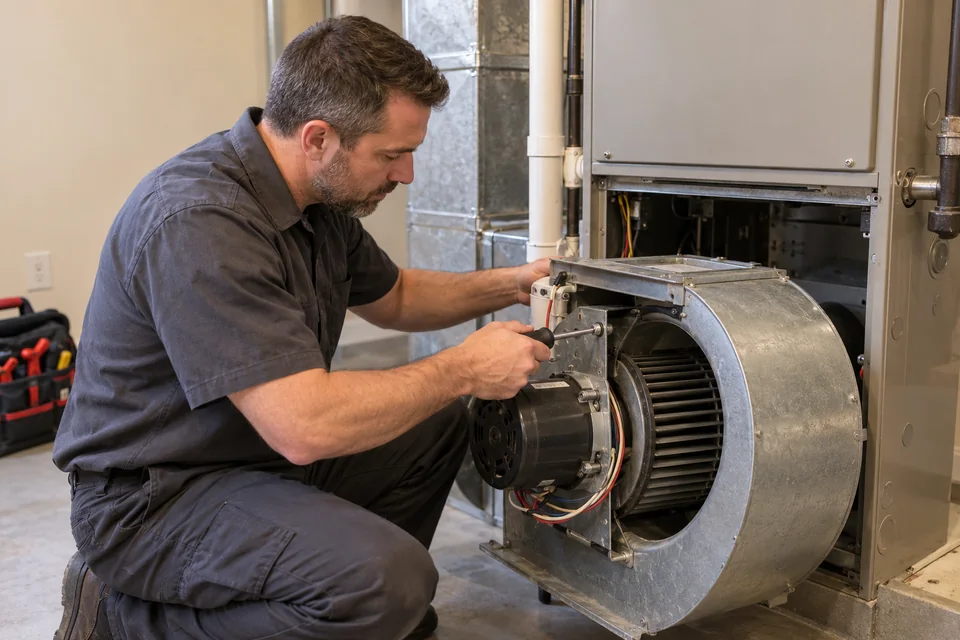
Not starting and not heating are different.
A furnace that does nothing when the thermostat calls for heat presents a different pattern from one that moves air but never warms the room. Tell the provider whether you hear the blower, a brief start attempt or repeated clicking, and whether any warm air reaches the supply vents.
When air moves without warmth
If the furnace blows cold or lukewarm air, explain whether this happens only at the beginning of a cycle or continues throughout the run. A fan setting, heating-stage issue or another equipment fault may be relevant; a description alone does not identify a failed component.
- No response: the thermostat calls for heat, but the furnace appears inactive.
- Air without warmth: the fan moves air while rooms remain cold.
- A brief start: the unit begins, then stops before warming the home.
- Uneven heat: some spaces warm while other rooms stay uncomfortable.
What to note before a no-heat call.
Write down when the problem began, the thermostat setting, whether the issue affects the whole home and any message visible without opening the furnace. Mention a recent power interruption, thermostat change or filter replacement if one occurred.
If there is no immediate safety concern, you can confirm ordinary thermostat settings and check for an obvious blocked room register. Follow the equipment manual for routine filter care. Do not bypass safety controls, relight unfamiliar equipment, repeatedly reset a fault or open gas and electrical components.
A furnace that starts briefly and repeatedly shuts down is covered in our short-cycling and shutdown guide. That page focuses on the timing of repeated runs.
Discuss the equipment and the diagnosis.
Ask whether the independent provider works on your gas or electric furnace and installed model. Depending on the findings, a professional may assess thermostat communication, ignition operation, blower performance, airflow and relevant safety controls.
Words such as igniter, flame sensor or control board can help you understand a provider’s explanation. They are not a diagnosis based on a website symptom list. Ask what was tested, what failed and whether the proposed repair addresses the cause.
For your Lincoln home, discuss appointment availability and any diagnostic charges before booking. If repair and replacement are both considered, ask the provider to explain the condition and suitability of the existing installation.
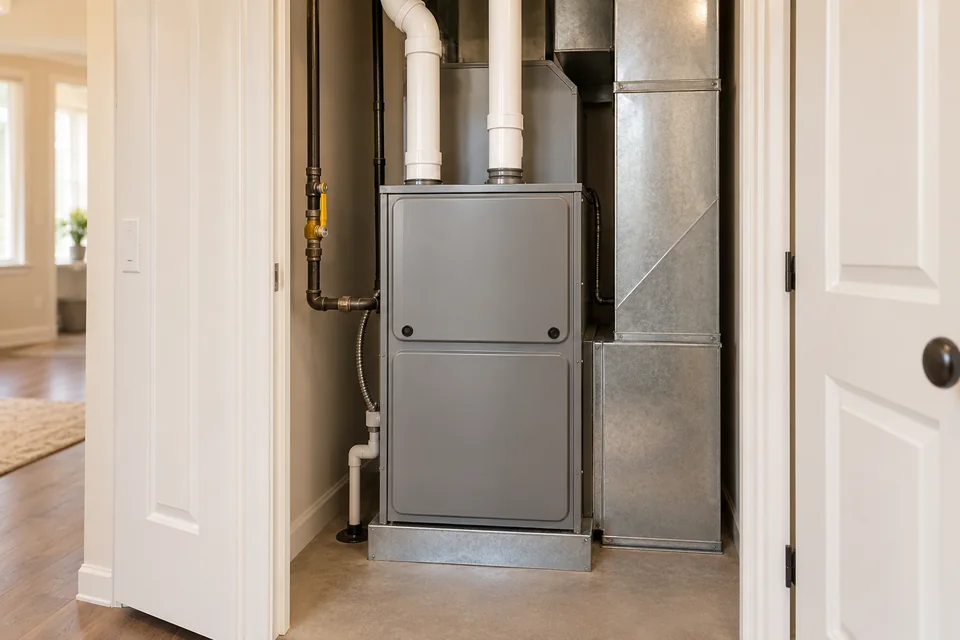
A few points to clarify.
Is cold air always a gas-furnace ignition fault?
No. Air without warmth can have several explanations. Tell the provider the fuel type, fan behaviour and timing; a professional assessment is needed to establish the cause.
Can a thermostat display look normal while the furnace fails?
Yes. A lit display does not establish that the furnace is producing heat. Report both the thermostat behaviour and what you hear or feel at the vents.
Does a no-heat enquiry guarantee an emergency visit?
No. Ask about provider availability and the offered appointment options. The referral line is not an emergency-response service.